

Need one-of-a-kind website functionality? Our custom website development team can tailor solutions to meet all your business needs. Submit your ideas today and get your exclusive proposal!
Is your official website becoming the heaviest burden on your business growth? You might have experienced this dilemma: you want to add a specialized online booking system for your clients, only to find the template’s functions are severely restricted. You see competitors with highly distinctive website designs, while yours looks identical to countless others, failing to highlight your brand value. Even more frustrating, your site is slow, and you watch helplessly as potential clients leave out of impatience while waiting for pages to load.
A well-designed website shouldn’t be a “limiter” for your business; it should be a “growth engine” driving revenue. This is exactly the core value of Custom Website Development. It’s not just about building a website from scratch; it is the key to unlocking your business’s full potential. In this article, we will thoroughly reveal how leveraging the power of customization—across client acquisition, operational efficiency, and brand value—can help you achieve exponential growth, while providing you with a clear evaluation method and cost breakdown.
Has Your Business Hit the "Template Website" Ceiling?
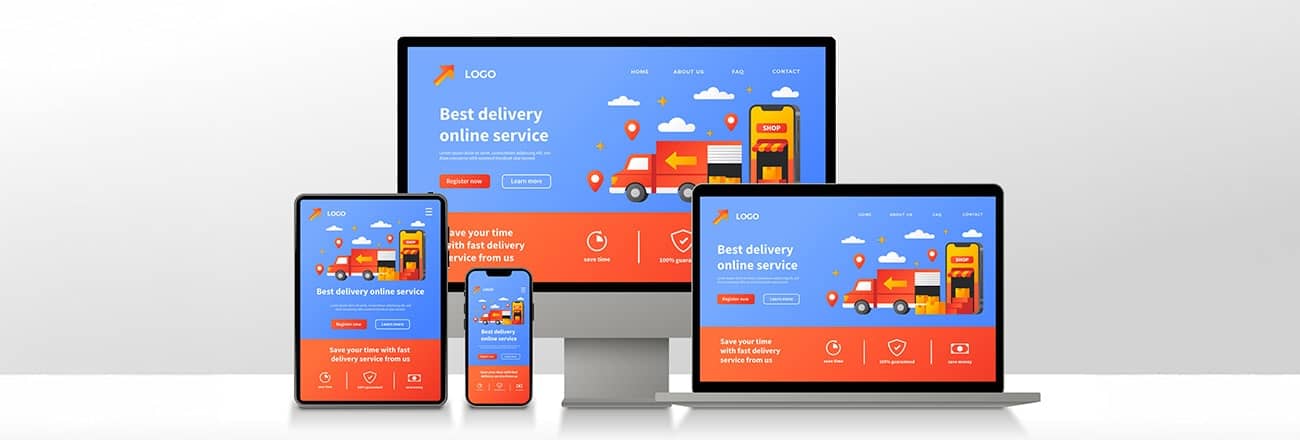
In the early stages of a startup, template websites are indeed a logical starting point due to their low cost and quick launch times. But as your business expands, you will find yourself constantly hitting an invisible ceiling built of “limitations.” These restrictions don’t just hinder development; they can erode the business foundation you’ve worked so hard to build.
| Symptom 1: Brand Image Hijacked by "Templates"
Your brand is unique, but your website looks just like thousands of others. This is the original sin of a template website. Under rigid frameworks, your brand image is severely diluted. We once had a high-end consulting client who, before upgrading their site, lost a major potential client. The prospect bluntly stated: “Your website looks almost identical to a newly launched small business; it made us doubt your professionalism.” This is the most direct damage poor UI/UX (User Experience) can do to brand value. A website that fails to convey your unique value proposition only makes you look cheap and faceless in the market.
| Symptom 2: Workflows Restricted by "Functionality"
As your business processes become increasingly complex, the functional limitations of template websites become glaringly obvious. You might want to seamlessly integrate website customer data into your company’s ERP or CRM system, only to find the template supports just a few specific platforms or requires expensive third-party plugins. You want to offer differentiated services to different tiers of clients, but the rigid membership tier system won’t allow it. Or, you need a complex pricing and booking system, but the template’s options are too basic. These limitations force your business to adapt to the website, rather than having the website serve your business, silently adding massive labor costs and operational friction.
| Symptom 3: Hidden Performance and Security Risks
To be compatible with various functions, the code of many template websites becomes exceptionally bloated, leading to severe performance issues. Slow loading speeds not only annoy visitors but directly penalize your SEO rankings. More worryingly, template websites often rely heavily on third-party plugins. Every plugin vulnerability can become an entry point for hackers. Once a site is hacked due to security flaws, it not only leads to data leaks and reputation damage, but your hard-earned business results could be destroyed overnight.
Do these symptoms resonate with you? When your website turns from an assistant into an obstacle, it means the time for an upgrade has arrived. Now, let’s dive into the solution that can truly break through that ceiling.
Breaking the Ceiling: What is True "Custom Website Development"?
Many mistakenly believe custom website development is just “writing code from zero,” but this vastly underestimates its core value. It is not a flex of technology; it is an end-to-end solution driven by business strategy, designed to create a digital asset that evolves with your business.
| Not Just Building from Scratch, but Designing from "Business Goals"
True customization begins with a profound question: “What problem does this website need to solve for your business?” It requires the development team to deeply understand your business goals, analyze your target audience, and based on that, design solutions that achieve specific business metrics. Want to reduce customer service costs? We can build a smart Q&A database. Want to boost customer loyalty? We can design a unique membership reward mechanism. Every function, every page, every interactive design revolves tightly around the ultimate ROI (Return on Investment). This is the essence of custom website development—translating your business intelligence into a highly efficient digital experience.
| Template vs. Custom: Visually Understanding the Key Differences
To give you a more intuitive understanding, here is a breakdown revealing the essential differences between Custom Websites vs. Template Websites across key dimensions:
- Design Uniqueness
- Custom Site: 100% Original. From brand identity to user flow, every pixel is tailor-made for you.
- Template Site: Modified within a fixed framework. Design flexibility is highly restricted; easy to “clash” outfits with other sites.
- Functional Scalability
- Custom Site: Limitless potential. Can develop unique features or integrate with any system at any time as your business grows.
- Template Site: Confined to existing plugins. If a suitable plugin doesn’t exist, the function cannot be realized.
- Website Ownership
- Custom Site: 100% Ownership. You own the complete source code and data; it is your digital asset.
- Template Site: Platform rental. You only have usage rights. Stop paying, and the website could disappear instantly.
- SEO Optimization Potential
- Custom Site: Extremely High. Clean code and flexible architecture allow for any depth of SEO optimization.
- Template Site: Basic but limited. Bloated code and fixed structures limit the room for advanced optimization.
- Long-Term Costs
- Custom Site: Higher initial investment, but controllable subsequent maintenance costs with no hidden fees.
- Template Site: Cheap initially, but long-term costs (monthly fees, plugin fees, commissions) accumulate continuously.
- Security
- Custom Site: Exclusive protection. A targeted security architecture is built, making it less likely to be the target of mass attacks.
- Template Site: Relies on generic updates. Plugin vulnerabilities are common; once an outbreak occurs, massive amounts of sites face risks simultaneously.
Understanding these strategic differences, you might wonder how these advantages translate into real, quantifiable business growth. Let’s look at three real-world case studies showing how custom features become growth engines.
Igniting the Growth Engine: How Custom Features Drive 200% Business Growth
Theoretical advantages must translate into commercial success. The following three cases—focusing on client acquisition, conversion, and retention—demonstrate how custom features solve tough commercial pain points and yield staggering growth.
| Case 1: Building an Automated Sales Funnel, Boosting Lead Conversion by 70%
- Commercial Pain Point: A B2B enterprise providing professional solutions relied on sales reps manually following up on leads generated from trade shows or their website. This was inefficient, made it hard to judge client intent, and resulted in a massive loss of potential clients during long follow-up cycles.
- Custom Solution: We built a content-centric automated sales funnel. When a visitor downloaded an industry whitepaper, the system automatically tagged them as “high intent” via CRM integration and triggered a series of preset email nurturing workflows. It segmented them based on subsequent behaviors (e.g., clicking specific case studies) and automatically assigned the most mature sales leads to the sales team.
- Growth Benefit: After implementation, the enterprise’s lead conversion rate increased by 70% within six months. The sales team no longer searched for a needle in a haystack; they focused on clients with genuine needs, vastly improving closing efficiency.
| Case 2: Optimizing E-commerce Checkout, Reducing Cart Abandonment by 50%
- Commercial Pain Point: A growing e-commerce website suffered from a persistently high cart abandonment rate. Backend data showed many users gave up during the tedious steps of filling out shipping addresses and selecting payment methods.
- Custom Solution: Referencing research from the Baymard Institute, we designed a completely new one-page checkout flow. We consolidated all mandatory information onto a single page and, through custom payment gateway integration, incorporated multiple mobile payment options. More importantly, we customized the API integration with their third-party warehouse system, syncing inventory and logistics status in real-time.
- Growth Benefit: In the first quarter after the new flow launched, the overall cart abandonment rate dropped from an average of 45% down to 22%, directly driving significant revenue growth for the site.
| Case 3: Establishing an Exclusive Membership Platform, Increasing LTV by 80%
- Commercial Pain Point: A knowledge-sharing platform offering online courses faced low membership renewal rates and poor community stickiness. The templated membership system was too basic, failing to give paying users a sense of exclusivity and belonging.
- Custom Solution: We engaged in custom website development to create a multi-functional membership platform. Beyond basic course viewing, we added learning progress tracking, exclusive content unlocks upon completing specific modules, and a members-only forum. The backend CMS (Content Management System) was deeply customized, allowing admins to easily set viewing permissions and exclusive perks for different membership tiers.
- Growth Benefit: This brand-new membership center vastly improved user engagement and perceived value. Within a year, the platform’s member retention rate rose by 40%, and the Customer Lifetime Value (LTV) grew by nearly 80%, successfully converting one-time users into loyal brand advocates.
These real growth stories prove that customization isn’t just about making things look pretty; it’s a powerful tool for optimizing core business workflows. However, is the process of developing such a powerful tool out of reach? Let’s unveil the mystery.
Demystifying Custom Development: A Full Breakdown of Process, Time, and Cost

Many enterprises shy away from custom websites out of fear that the process is “too complex” and “too expensive.” In reality, a professional development process is transparent and controllable. The goal of this section is to establish clear expectations, eliminate doubts, and give you confidence in your decision-making.
| The Journey of a Custom Website: 5 Major Steps from Idea to Launch
Think of building a house; you wouldn’t want workers to just start laying bricks randomly. A clear blueprint is vital. A professional custom website development process typically includes these 5 steps:
- Discovery & Strategy: The starting point. We conduct in-depth interviews with you like business consultants, understanding your goals, pain points, target audience, and budget to establish core functions and success metrics.
- UI/UX Design: The blueprint and interior design. UI/UX designers create wireframes to map user flows and information architecture. Upon approval, they create stunning visual Mockups to ensure the site is both beautiful and user-friendly.
- Development: The construction phase. Frontend engineers turn visual designs into code (what you see). Backend engineers build the database, servers, and backend functionality (the inner logic you don’t see).
- Testing & QA: Quality acceptance. Testers rigorously check the site across various devices and browsers, ensuring all functions work perfectly with no Bugs, guaranteeing stability after launch.
- Deployment & Maintenance: Handing over the keys. We deploy the site to the live server—it’s officially online! Afterward, we provide tech support and website maintenance to ensure your digital asset runs securely and efficiently.
| "Is Custom Always More Expensive?" Analyzing 4 Key Pricing Factors
“Custom” doesn’t mean “sky-high prices.” Custom website fees are highly flexible and depend on your specific needs. Understanding what influences a custom web design quote helps you plan your budget effectively:
- Functional Complexity: The most critical factor. A simple corporate portfolio costs vastly less to develop than a complex e-commerce platform requiring payment, logistics, and ERP integrations.
- Design Refinement: Does the site need extensive custom animations, interactive effects, or original illustrations? Highly refined visual designs require more design and frontend development time.
- Page Count and Scale: A 5-page corporate site requires far less work than a shopping site with hundreds of product pages.
- Third-Party API Integrations: Every API integration (e.g., Google Maps, Facebook Login, electronic invoicing systems) means extra research and development time.
| Limited Budget? "Semi-Custom" and "Phased Development" are Great Options
If your budget is tight but you refuse to be restricted by templates, don’t worry—there are smart alternatives.
- Semi-Custom: We can use a highly flexible CMS like WordPress as a foundation, paired with deeply customized themes and plugins. It’s like doing a premium renovation on a solid existing structure. It controls costs while offering high design freedom and functional scalability—a very common WordPress customization approach.
- Phased Development: You can adopt the MVP (Minimum Viable Product) concept. Focus your budget on developing the most critical core features first, launch the site, and quickly validate it in the market. Once the site generates profit, reinvest to fund phase 2 and 3 feature iterations.
Understanding these practical solutions makes custom websites an actionable business strategy, not just an out-of-reach dream. It’s time to make the smartest next move for your business.
Conclusion: Your Next Step—Invest in a Website That Truly Grows With You
Looking back, it’s clear that continuing to use a functionally limited, visually generic template website is akin to setting an artificial bottleneck on your business growth. It might save costs in the short run, but looking long-term, the opportunity costs and operational friction have already far exceeded expectations.
We have proven that custom website development is far more than an aesthetic upgrade; it is a profound business strategy investment. It can acquire more clients through automated sales funnels, boost conversions by optimizing user experiences, and deepen brand value and loyalty through exclusive platforms. It is a decision that directly drives revenue, boosts efficiency, and ultimately delivers high ROI.
Don’t let your website be a stumbling block to your business development anymore. It’s time to invest in a digital partner that can grow with you and continuously create value.
Do you have initial ideas? Or are you unsure if your business truly needs customization? Click the button below now to book a 30-minute free project consultation! Let our expert consultants provide a comprehensive assessment and tailor preliminary solution recommendations for you!
Frequently Asked Questions
Not necessarily. Costs depend entirely on functional complexity. For clients with limited budgets, we often suggest starting with a “Semi-Custom” approach (e.g., deep custom development based on WordPress) or “Phased Development.” Launch an MVP (Minimum Viable Product) with core functions first, satisfying key needs while controlling the initial budget, and iterate gradually once it generates returns.
Timelines depend on the project’s scale and complexity. Generally, a small-to-medium corporate website takes 6 to 10 weeks to develop. A complex e-commerce platform or SaaS-type site might take 3 to 6 months or longer. During the initial “Discovery” phase, we will confirm a clear and feasible development timeline with you.
Absolutely. We deeply understand the importance of content autonomy. Therefore, we tailor an intuitive, user-friendly backend CMS (Content Management System) for you. Upon official launch, we provide complete training and operation manuals, ensuring your team can easily and independently update articles, products, images, and other content.
Yes, and the advantages are highly significant. There are three main reasons:
- Clean Code: Custom sites don’t have the bloated code generated by templates trying to be compatible with everything. The site structure is lean, and load times are faster, which perfectly aligns with Google’s core algorithm requirements for site performance in recent years.
- High Structural Flexibility: We can plan the URL structure, navigation hierarchy, and internal linking strategy 100% according to optimal SEO practices, free from any template restrictions.
- Implementation of Advanced Tech: Custom sites make it much easier to implement advanced SEO tech like Schema Markup and Server-Side Rendering (SSR). These help search engines better understand your page content, granting you better ranking opportunities.