

The digital landscape is evolving faster than ever. What looked futuristic yesterday—like a parallax scroll or a mobile-first layout—is a standard expectation today. For businesses, designers, and marketers, this rapid pace presents a constant challenge: how do you keep a website feeling fresh, engaging, and competitive?
This comprehensive report on the future of web design 2026 is not just another list of fleeting fads. It’s a strategic guide designed to help you understand the powerful forces shaping the web. We will explore three major shifts transforming our digital world: the AI-driven intelligence revolution, the human-centric counter-movement in aesthetics, and the non-negotiable technical foundations that make it all possible. By understanding these trends, you’ll be equipped to make informed decisions that resonate with users and drive results.
Part 1: The Intelligence Revolution – AI-Driven & Dynamic Experiences
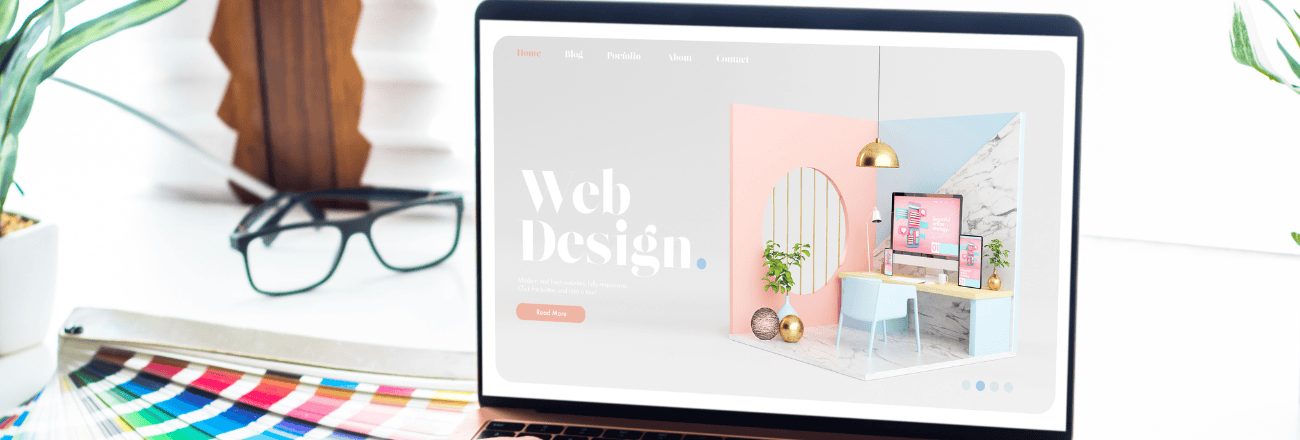
AI is no longer a gimmick or a buzzword; it’s the new engine powering smarter, more personalized, and conversational web experiences. Websites are shifting from static brochures to dynamic partners, anticipating user needs and interacting in real-time. This is the new baseline for digital intelligence.
| 1. AI-Powered Hyper-Personalization
Websites are becoming chameleons. Imagine a site that adapts its content, layout, and product recommendations based on an individual’s unique browsing behavior, location, and past interactions. This is AI-powered personalization in action. Instead of a one-size-fits-all approach, users see dynamic content that is uniquely relevant to them.
So, how does AI personalize websites? It analyzes a user’s data—pages visited, time spent, items clicked—to build a profile. An e-commerce site might surface your recently viewed products on the homepage, while a B2B service site could display the contact information for your nearest local branch. The result is a frictionless experience that boosts engagement and significantly increases conversion rates, with some studies showing personalization can lift revenues by 5-15%.
| 2. The Rise of Conversational UI & Advanced Chatbots
The familiar “chat with us” pop-up is getting a massive upgrade. We’re moving beyond simple scripted support bots and into the era of true conversational UI. Powered by sophisticated AI, these advanced AI chatbots and AI agents can handle complex queries, guide users through intricate sales funnels, and offer proactive assistance before a user even asks for help.
This trend represents a fundamental shift from browsing to conversing. Users can simply state their needs in natural language, and the website’s AI agent can understand the context and guide them to a solution. For businesses, this means reduced support tickets, higher lead qualification rates, and a 24/7 digital concierge that enhances the customer experience.
| 3. Voice-Activated Interfaces (VUI)
“Hey Google, find me a nearby Italian restaurant.” We already use voice to navigate our world; now, that behavior is coming to websites. Voice-activated interfaces (VUI) allow users to navigate menus, fill out forms, and interact with content using only their voice.
This isn’t just a convenience; it’s a massive step forward for accessibility, enabling hands-free browsing for users with mobility impairments or those who are multitasking. From a strategic standpoint, this trend directly impacts SEO. Optimizing your content for “voice search” queries—which are often longer and more conversational—becomes a critical component of your voice search optimization strategy.
| 4. AI-Synthesized Design & Content Blocks
Will AI replace web designers? No, but it is becoming an indispensable assistant. Modern AI design tools can generate entire layout concepts, suggest vibrant color palettes, and even draft initial copy, dramatically speeding up the creative process. Designers can use prompts to explore hundreds of ideas in minutes, breaking through creative blocks and focusing their energy on strategy and refinement.
One of the most significant implications of this trend is for SEO. As search engines like Google rely more on Google AI Overviews to answer queries, having well-structured, factually accurate, and easily digestible content is paramount. Creating AI-citable content—verified blocks of information that an LLM can trust and reference—will be a key factor in gaining visibility in this new search landscape.
This intelligent, AI-driven layer is making websites smarter and more efficient. But as technology becomes more perfect, a fascinating counter-movement is emerging—one that champions imperfection, personality, and human emotion.
Part 2: The Human-Centric Counter-Movement – Aesthetics & Emotional Connection
As a direct and necessary response to the streamlined perfection of AI, design in 2026 is trending toward warmth, personality, and nostalgia. The goal is no longer just to inform but to create a genuine emotional connection. This is where art meets science, giving websites a soul.
The Dueling Aesthetics: Maximalism vs. Warm Minimalism
Two seemingly opposite styles are set to dominate the visual landscape, each offering a different way to connect with users.
| 5. Maximalism & Dopamine Colors
Say goodbye to stark, empty spaces. Maximalism web design is an explosion of energy. It embraces vibrant color palettes, overlapping elements, mismatched fonts, and rich, layered textures. This is not chaos for chaos’s sake; it’s a controlled and curated approach designed to make a memorable impact and evoke a strong emotional response.
This trend taps into the idea of “dopamine colors” and “dopamine design”—using bright, joyful, and stimulating visuals to make users feel happy and excited. It’s a bold statement for brands that want to stand out and radiate confidence.
| 6. Warm, "Snug" Minimalism (Resonant Stark)
On the other end of the spectrum is a new evolution of minimalism. While classic minimalism can sometimes feel cold or clinical, minimalist web design 2026 is all about warmth and comfort. Known as warm minimalism or “snug” design, it maintains clean layouts and generous whitespace but infuses them with a soft, human touch.
Think of soft neutral palettes derived from nature, delicate and readable serif fonts, subtle grain textures, and gentle, almost imperceptible gradients. This approach prioritizes clarity and serenity, creating a calm, trustworthy, and sophisticated digital space that invites users to relax and engage.
The Nostalgia Wave: Why We're Looking Back
In a world of constant change, we often find comfort in the familiar. This psychological pull is driving a massive nostalgia wave in web design, with designers reinterpreting aesthetics from bygone decades for modern audiences.
| 7. Retro Revival & '80s Excess
This isn’t about cheesy fonts and clashing neons. The modern retro web design revival draws inspiration from the sophisticated print design of the ’70s and ’80s. Think grainy photo filters, elegant serif fonts reminiscent of old magazines, and thin-line motifs that create a sense of classic, understated style. These vintage web aesthetics feel timeless and authoritative.
| 8. Dial-Up Design & Y2K Aesthetics
In our experience, one of the most surprising trends is the resurgence of Y2K website design. It channels the raw, experimental energy of the early internet with pixelated fonts, brash color combinations (like lime green and hot pink), beveled buttons, and a hint of cyber-goth edge. This dial-up design aesthetic resonates deeply with Gen Z, who are nostalgic for an era of digital optimism they barely experienced. It feels authentic, anti-corporate, and playfully irreverent, making it one of the most potent Gen Z design trends.
| 9. Retrofuturism
What did people in the 1960s think the year 2026 would look like? The retrofuturism aesthetic answers that question. It fuses vintage styles with futuristic themes, creating a unique visual language of chrome textures, glowing neon lines, and optimistic sci-fi visuals. It’s a look that feels both nostalgic and forward-thinking at the same time.
| 10. Museumcore & Elevated Brutalism
This aesthetic splits into two fascinating directions. Museumcore borrows from the ornate, detailed, and luxurious world of classical art, using Renaissance and Baroque motifs to create a feeling of history and prestige. In contrast, elevated brutalism takes the raw, unpolished, and “anti-design” principles of traditional brutalism and makes them sophisticated. It pairs stark, blocky structures with high-impact photography and highly refined typography for a look that is both raw and chic.
Creating Tactile & Authentic Experiences
To counter the slick, digital nature of the web, designers are incorporating elements that feel tangible and real.
| 11. Human Scribble & Collage
What’s the ultimate anti-AI statement? Something made by a human hand. Hand-drawn web design is booming, with sites featuring scribbled annotations, hand-drawn icons, and scrapbook-style collage aesthetic layouts. This approach communicates personality, playfulness, and, most importantly, authentic design. It tells the user that a real person is behind the screen.
| 12. Frosted Touch (Glassmorphism)
Glassmorphism is defined by its signature frosted glass effect—a translucent, blurred background that creates a sense of depth and visual hierarchy. The translucent UI feels modern, light, and tactile, as if you could reach out and touch the different layers of the interface.
| 13. Light Skeuomorphism & Neumorphism
Skeuomorphism—making digital elements look like their real-world counterparts—is back, but with a modern twist. This isn’t the heavy-handed leather-bound calendar of the past. Light skeuomorphism and neumorphism UI use subtle shadows and highlights to create soft, pressable-looking buttons and interface elements that extrude from the background. This tactile design approach improves usability by giving users clear visual cues about what is interactive.
A beautiful, emotionally resonant design is powerful, but it’s only half the story. The most creative aesthetic is useless if the site is slow, broken, or inaccessible. That’s why the third major shift is all about the unshakeable technical foundations that support the entire user experience.
Part 3: The Foundational Pillars – Performance, Accessibility & Immersion
The most beautiful design will fail if the site is slow, unusable, or static. These are the non-negotiable trends that underpin every aspect of the future of web design 2026. Getting these right is no longer an option; it’s a prerequisite for success.
| 14. Immersive 3D & Spatial Elements
Static images are becoming a thing of the past. The web is moving into the third dimension. We’re seeing a surge in interactive 3D models that users can spin and explore, scroll-triggered animations that create a sense of depth, and AR previews that let you see a new sofa in your living room before you buy it.
Powered by technologies like WebGL, these immersive elements are a game-changer for e-commerce and storytelling. As we’ve seen with brands like Nike and IKEA, allowing users to visualize products in a realistic, interactive way dramatically enhances the customer experience and builds purchase confidence.
| 15. Purposeful Motion Design & Micro-interactions
Motion is no longer just for decoration; it’s a critical part of usability. Purposeful motion design uses animation to guide the user’s eye, provide valuable feedback, and make interfaces feel responsive and alive. This includes subtle micro-interactions, like a button that changes color when you hover over it or a form field that gently shakes when you enter incorrect information.
The key here is “purposeful.” We’re not talking about gratuitous, site-slowing animations. We’re talking about small, thoughtful movements that enhance clarity and create a smoother, more intuitive user journey. Purposeful animation makes a website feel polished and professional.
| 16. Hyper-Fast Performance (Core Web Vitals 3.0)
Speed is not an afterthought; it is a core feature of good design. In 2026, sub-1.5 second page load speed will be the standard. The impact of core web vitals on UX cannot be overstated—a slow site leads to frustration, high bounce rates, and lost revenue.
Google uses website performance metrics, known as Core Web Vitals, as a direct ranking factor in its search algorithm. In our experience, focusing on optimizing images, streamlining code, and investing in quality hosting yields one of the highest ROIs in all of web design. According to Google’s own data, as page load time goes from one second to three seconds, the probability of a bounce increases by 32%.
| 17. Is Accessibility-First Design a Legal Necessity?
Yes, it is increasingly becoming one. Accessibility-first design is the practice of creating websites that are usable by everyone, including people with disabilities. This is moving from a ‘nice-to-have’ ethical consideration to a legal and business imperative, with WCAG compliance (Web Content Accessibility Guidelines) becoming the global standard.
So, how to improve website accessibility? Key elements include ensuring high-contrast color modes, full keyboard navigation, proper support for screen readers, and descriptive alt text for all images. Adopting an inclusive design approach is not just about avoiding lawsuits; it’s a powerful signal of E-E-A-T (Experience, Expertise, Authoritativeness, Trustworthiness) that shows you value every single user.
| 18. Sustainable & Green Web Design
The digital world has a physical footprint. Sustainable web design is an emerging and important trend focused on reducing a website’s carbon footprint. This is achieved through highly optimized code, compressed images that require less energy to load, and choosing green hosting providers that use renewable energy.
This ethical consideration often comes with a fantastic side effect: a more sustainable website is almost always a faster, higher-performing website. It’s a win for the planet and a win for your users.
Understanding these individual trends is the first step. Now, let’s bring it all together and transform this knowledge into a concrete, future-proof strategy for your own website.
Putting It All Together: How to Build a Future-Proof Web Design Strategy for 2026
Knowing the trends is one thing; applying them effectively is another. This section synthesizes everything we’ve learned into a clear, actionable plan for business owners, marketers, and designers.
| Step 1: Define Your Core Goal (Clarity vs. Expression)
Before you fall in love with an aesthetic, start with your core web design strategy. The first question to ask is: what is my primary goal? Are you a B2B SaaS company that needs to build trust through clarity, where Warm Minimalism and an intuitive UI are paramount? Or are you a direct-to-consumer fashion brand that needs to express a bold personality, where Maximalism or a Y2K aesthetic would align perfectly with your brand identity? Let your goal define your aesthetic, not the other way around.
| Step 2: Integrate AI with Purpose, Not for Hype
It’s tempting to chase every new AI feature, but a successful AI implementation focuses on clear ROI. Don’t add a VUI just because it’s a trend. Instead, start with a high-impact, user-focused application. For most businesses, this means implementing a smart AI chatbot to improve customer service or using AI-powered product recommendations to increase average order value. Start small, measure the results, and scale what works.
| Step 3: Prioritize Performance & Accessibility from Day One
This is the most critical step. Your foundational web design choices must prioritize speed and inclusivity from the very beginning. These are not final-stage tweaks. Choose a modern, lightweight platform. Optimize every image before you upload it. Follow accessibility best practices as you build each page. A user-first approach that guarantees a fast and accessible experience is the bedrock of any successful modern website.
| Step 4: Use Nostalgia and Boldness to Tell a Story
Once your foundations are solid, you can layer on the personality. Use the aesthetic trends we’ve discussed—from retro-revival to human scribble—to reinforce your brand’s story. As an example from our work, a serious B2B financial tech company should probably avoid a playful “Human Scribble” theme. However, a creative agency or an e-commerce store targeting Gen Z could use that exact same theme to communicate authenticity and stand out from sterile, corporate competitors.
Conclusion: Embracing the Dichotomy of Future Web Design
The future of web design is defined by a beautiful and productive tension: the push for machine-like intelligence and the pull toward human-like creativity. It’s a balance between perfect efficiency and perfect imperfection.
The key takeaway is this: the most successful websites in 2026 will be those that master both sides of this coin. They will be incredibly smart, hyper-fast, and universally accessible, yet they will also feel deeply personal, authentic, and emotionally resonant. By understanding these trends and the macro-shifts driving them, you’re not just designing a website; you’re building a future-ready digital experience that connects, converts, and endures.
Ready to build a website that stands out in 2026? Contact us for a free consultation to discuss your web design strategy.
Frequently Asked Questions (FAQ)
While there isn’t one “most important” trend, the single biggest shift is the integration of two concepts: AI-driven personalization and performance. The ultimate goal is to deliver a hyper-relevant, emotionally engaging experience on a foundation that is blazingly fast and accessible to all users. If you get that combination right, you’re ahead of the curve.
Start with the foundations, which often have the highest impact for the lowest cost. Choose a modern, mobile-friendly platform (like WordPress or Webflow) and a high-quality template that already incorporates a “Warm Minimalism” aesthetic. Most importantly, focus on best practices that are free: write clear and concise copy, optimize your images for web use, and write descriptive alt text for every image to improve accessibility.
No, AI will not replace web designers; it will elevate them. AI is becoming an incredibly powerful tool that automates tedious tasks (like creating basic layouts or image variations) and serves as a powerful brainstorming partner. This frees up designers to focus on what humans do best: high-level strategy, deep user experience research, creative problem-solving, and brand storytelling.
The future of web design 2026 has a massive and direct impact on SEO. Technical performance (measured by Core Web Vitals), mobile-friendliness, and accessibility are no longer just “good for UX”—they are confirmed ranking factors in Google’s algorithm. Furthermore, creating a great user experience that reduces bounce rates and increases time on site sends strong positive signals to search engines. Finally, structuring your content to be easily citable for AI Overviews is becoming a critical new component of a modern SEO strategy.